





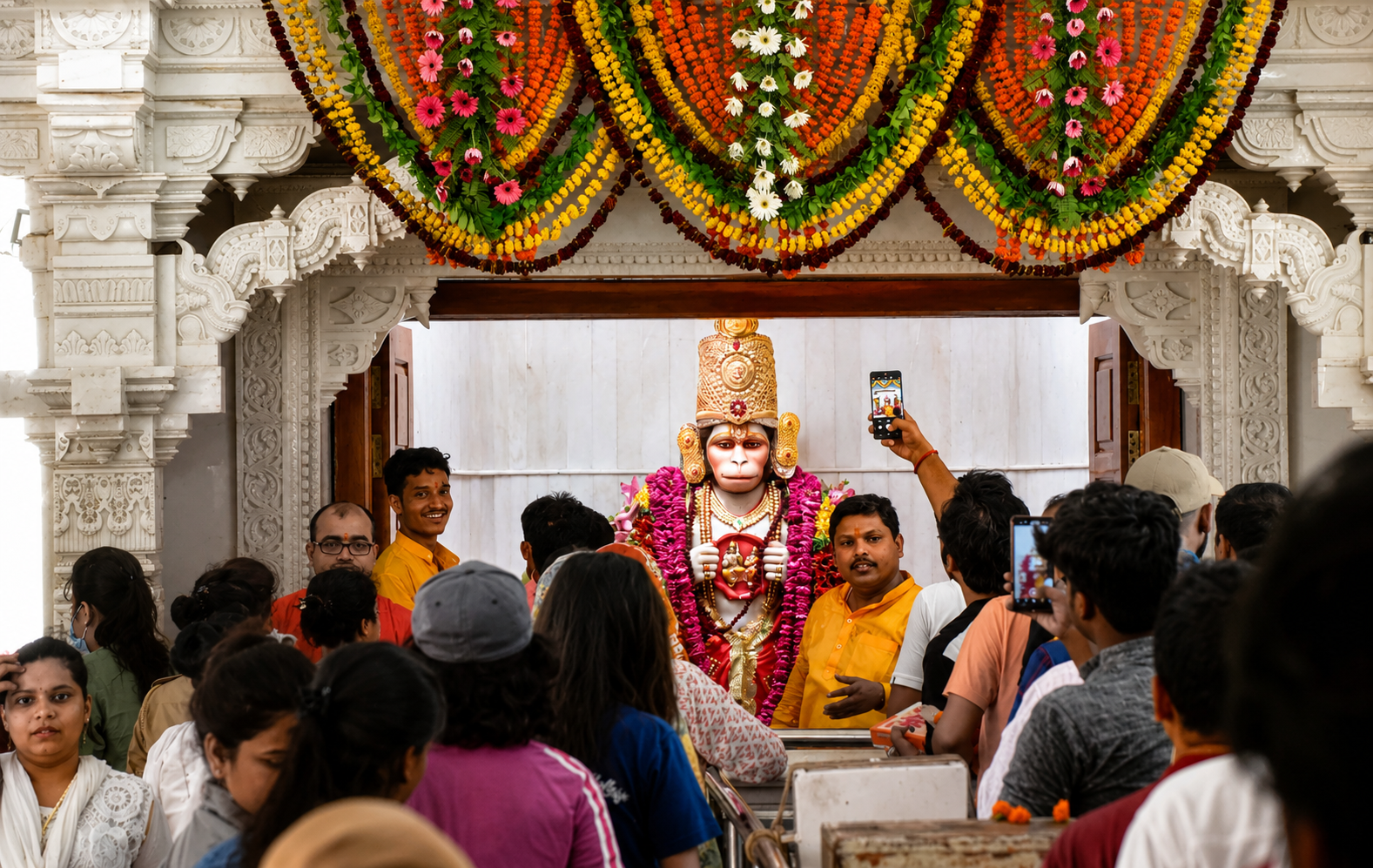
When summer reaches its peak and the hot winds of Jyeshtha begin to blow across the streets of Lucknow, something remarkable happens. The city transforms into a living celebration of faith, service, and togetherness.The city slows down for faith, service, and tradition. Roads fill with bhandaras. Devotees visit Hanuman temples. Volunteers offer water and sharbat to strangers. This is Bada Mangal, one of the most loved festivals of Lucknow. Roads are lined with bhandaras, volunteers distribute chilled sharbat and water and thousands of devotees visit Hanuman temples. This unique tradition is known as Bada Mangal, a festival that is celebrated with unmatched devotion in Lucknow.
What is Bada Mangal?
Bada Mangal refers to the Tuesdays that fall during the Hindu month of Jyeshtha (May-June). Each Tuesday is considered highly auspicious for the worship of Lord Hanuman. Devotees observe fasts, recite the Hanuman Chalisa and Sundarkand, visit temples, and most importantly, participate in acts of charity and community service through bhandaras.
In 2026, Bada Mangal holds special significance as there are eight Tuesdays during the sacred period (2 may-29 June) a rare occurrence that has generated immense excitement among devotees across Lucknow and surrounding regions.
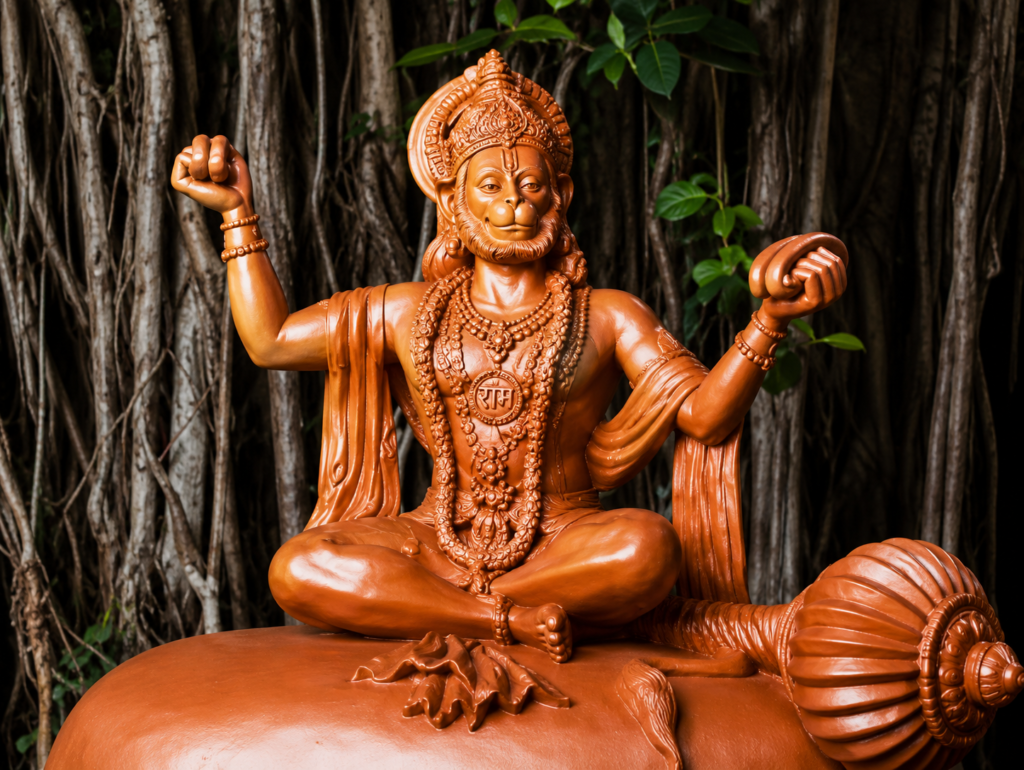
The Story Behind Bada Mangal
Like many traditions of Awadh, the story of Bada Mangal blends faith with history.
According to local legends, the origin of Bada Mangal is connected with the historic Hanuman temple of Aliganj. It is believed that Begum Alia, wife of Nawab Shuja-ud-Daula, dreamt of Lord Hanuman and was guided to a location where an idol of the deity was discovered. When attempts were made to move the idol, the elephant carrying it reportedly refused to move beyond a certain point. Taking it as a divine sign, a temple was built at that very spot.
Another popular belief says that after her prayers were answered and she was blessed with a son, the Begum began organizing annual celebrations and acts of charity in gratitude. Over time, these observances evolved into the grand tradition of Bada Mangal.
Some historical accounts also associate the growth of the festival with the Nawabs of Awadh, particularly during the era of Nawab Wajid Ali Shah, who encouraged the celebrations and strengthened the culture of public service associated with the occasion.
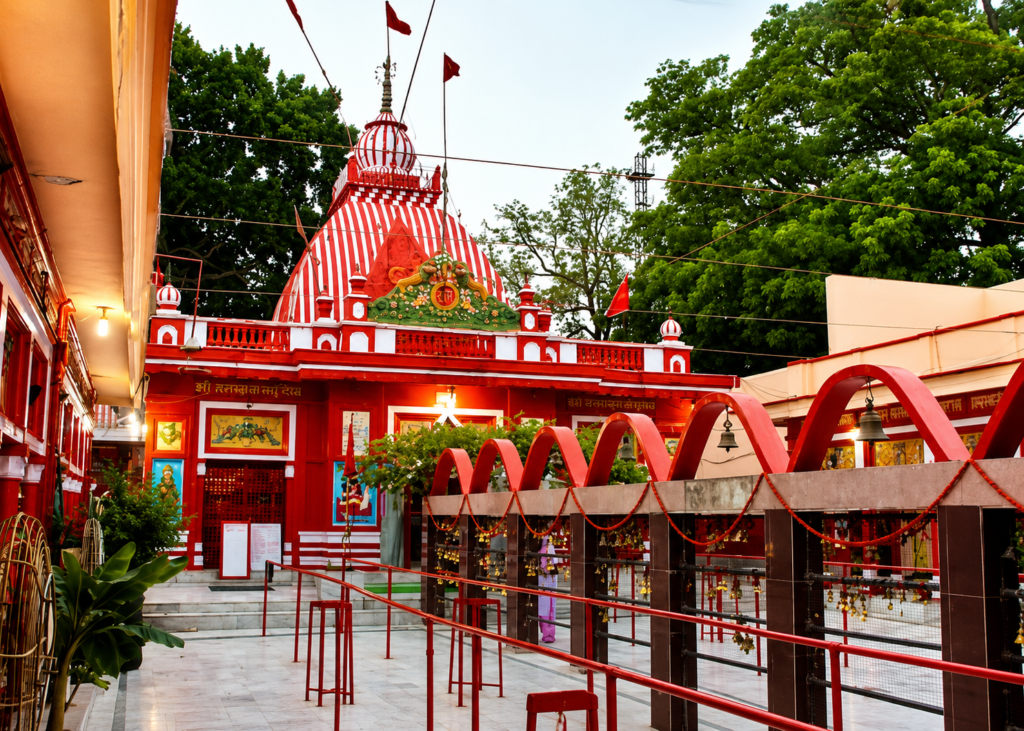
“The historic Aliganj Hanuman Temple, believed to be at the heart of the Bada Mangal tradition.”
A Festival Born from Lucknow’s Ganga-Jamuni Tehzeeb
What makes Bada Mangal truly extraordinary is that its roots lie in the composite culture of Lucknow.
Few cities in India can claim a festival dedicated to a Hindu deity that was nurtured and supported by Muslim rulers. The Aliganj Hanuman Temple itself stands as a symbol of this shared heritage. Even today, people from different faiths contribute to bhandaras, distribute water and food, and participate in community service during Bada Mangal.
This spirit of harmony continues to define the festival. For many residents, Bada Mangal is not about religion alone. It is about seva, hospitality, and caring for strangers in the scorching summer heat.
The Heart of Bada Mangal: Bhandaras
If there is one sight that defines Bada Mangal, it is the countless bhandaras spread across Lucknow.
From Hazratganj to Chowk, Aliganj to Gomti Nagar, and from small neighbourhood lanes to major roads, people set up stalls offering food, water, sharbat, buttermilk, fruits, and sweets free of cost. No invitation is needed. Anyone can stop, eat, drink, and continue their journey.
What began as a temple tradition has grown into a citywide movement of generosity. Families, businesses, social groups, and local communities eagerly wait for Bada Mangal every year to serve others.
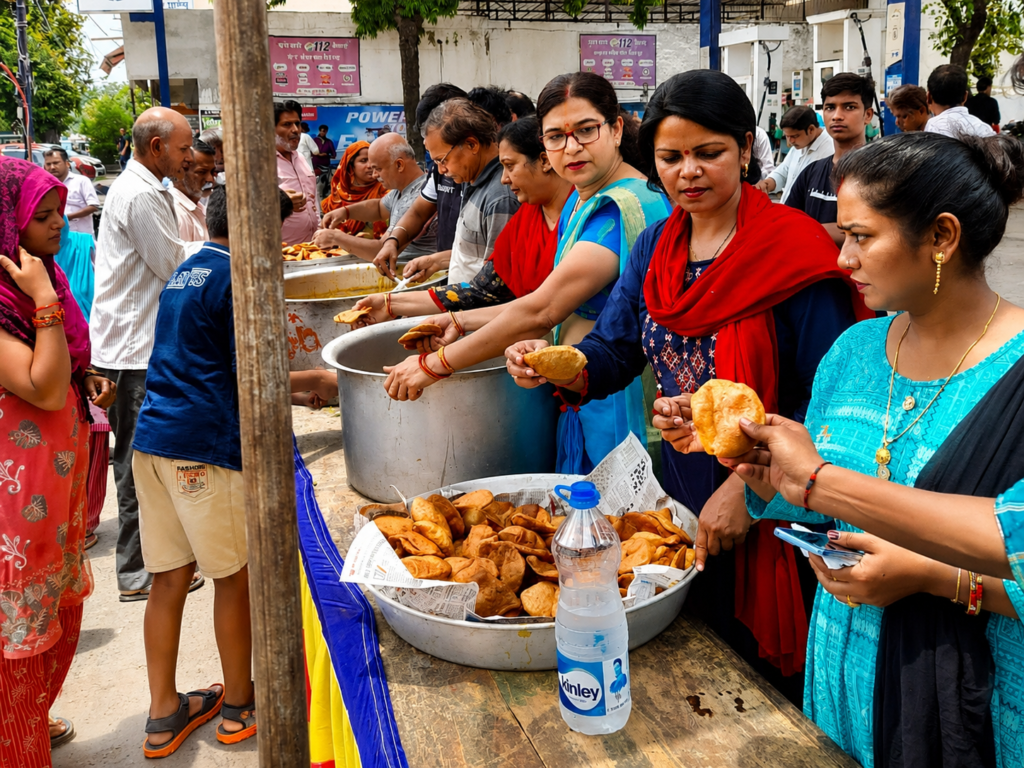
Many Lucknow families skip cooking on Bada Mangal and bring home prasad from nearby bhandaras.”
Why Lucknowites Wait for Bada Mangal Every Year
Ask any Lucknow resident about Bada Mangal and the memories come instantly.
Some remember visiting Hanuman temples with their grandparents before sunrise. Others recall cycling across the city with friends, tasting prasad from different bhandaras. Many households traditionally avoid cooking lunch on Bada Mangal, preferring to partake in the community meals being served across the city.
The festival has become deeply woven into the social fabric of Lucknow. It is one of those rare occasions when devotion, food, culture, and community merge into a single shared experience.
More Than a Festival
Bada Mangal is not measured by the number of devotees visiting temples or the amount of food distributed. Its true essence lies in the spirit of service.
In a world increasingly driven by transactions, Bada Mangal reminds people of the joy of giving without expectation. It turns an entire city into a place where strangers offer water to strangers, where faith inspires kindness, and where tradition keeps humanity alive.
That is why Bada Mangal remains one of Lucknow’s most cherished traditions.
It is not just a festival dedicated to Lord Hanuman.
It is Lucknow’s annual celebration of faith, compassion, hospitality, and the timeless beauty of its Tehzeeb.
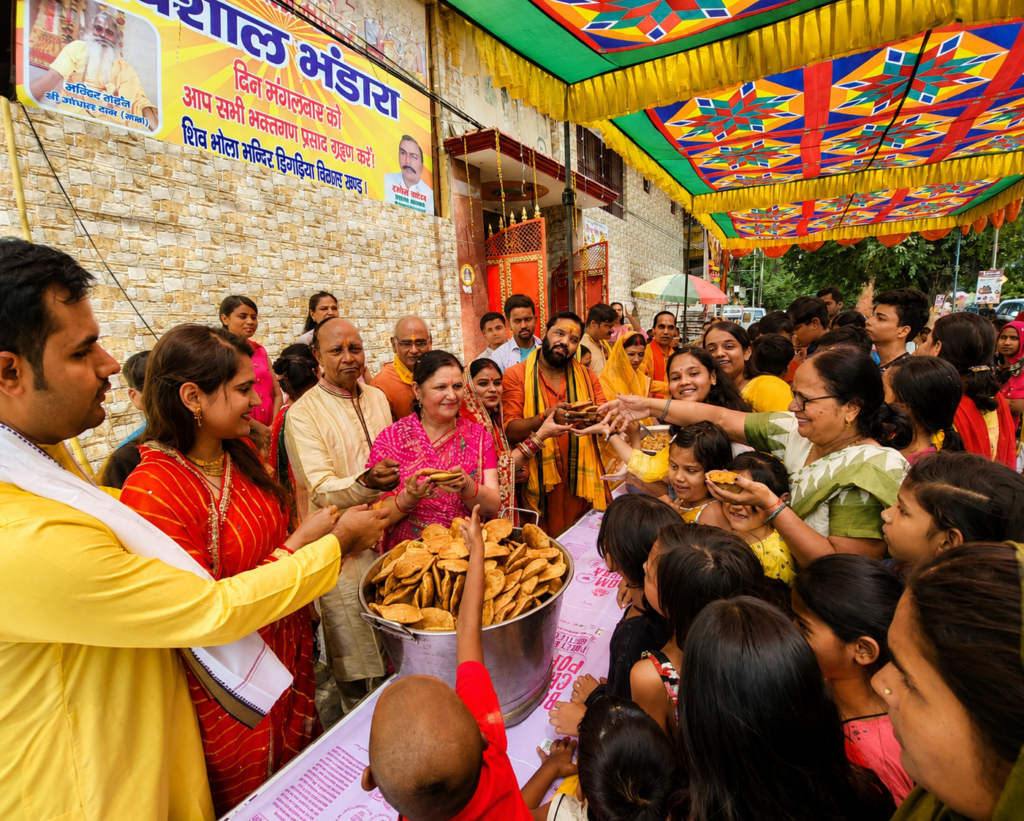
“Bada Mangal transforms Lucknow into a city of devotion, seva, and togetherness.”