



Ask someone about Lucknow, and chances are they’ll mention Chikan. But in this city, Chikan has two meanings. One is served on a plate through its famous culinary traditions, while the other is stitched into fabric through the timeless craft of Chikankari. Both are deeply woven into Lucknow’s identity and have carried the city’s name far beyond India’s borders.
Walk through the lanes of Chowk, Aminabad, or Hazratganj, and you will inevitably come across a piece of Chikankari. Delicate threads flowing across soft fabric. Floral patterns that seem painted rather than stitched. Intricate jaalis that resemble lace carved by hand.
For Lucknow, Chikankari is more than embroidery. It is memory, identity, livelihood, heritage, and art stitched together over centuries.
Today, Chikankari travels from the workshops of Lucknow to fashion runways, celebrity wardrobes, international exhibitions, and global online marketplaces. Yet behind every kurta, saree, dupatta, or gown lies a fascinating story of craftsmanship, evolution, and resilience.
The Language of Stitches
Traditional Chikankari is often described as “Chhattis Taankon Ka Khel” or the game of thirty-six stitches.
Over centuries, artisans developed numerous stitching techniques, each creating a different visual effect.
Some of the most celebrated stitches include:
Tepchi
A simple running stitch often used as the foundation of many designs.
Bakhiya
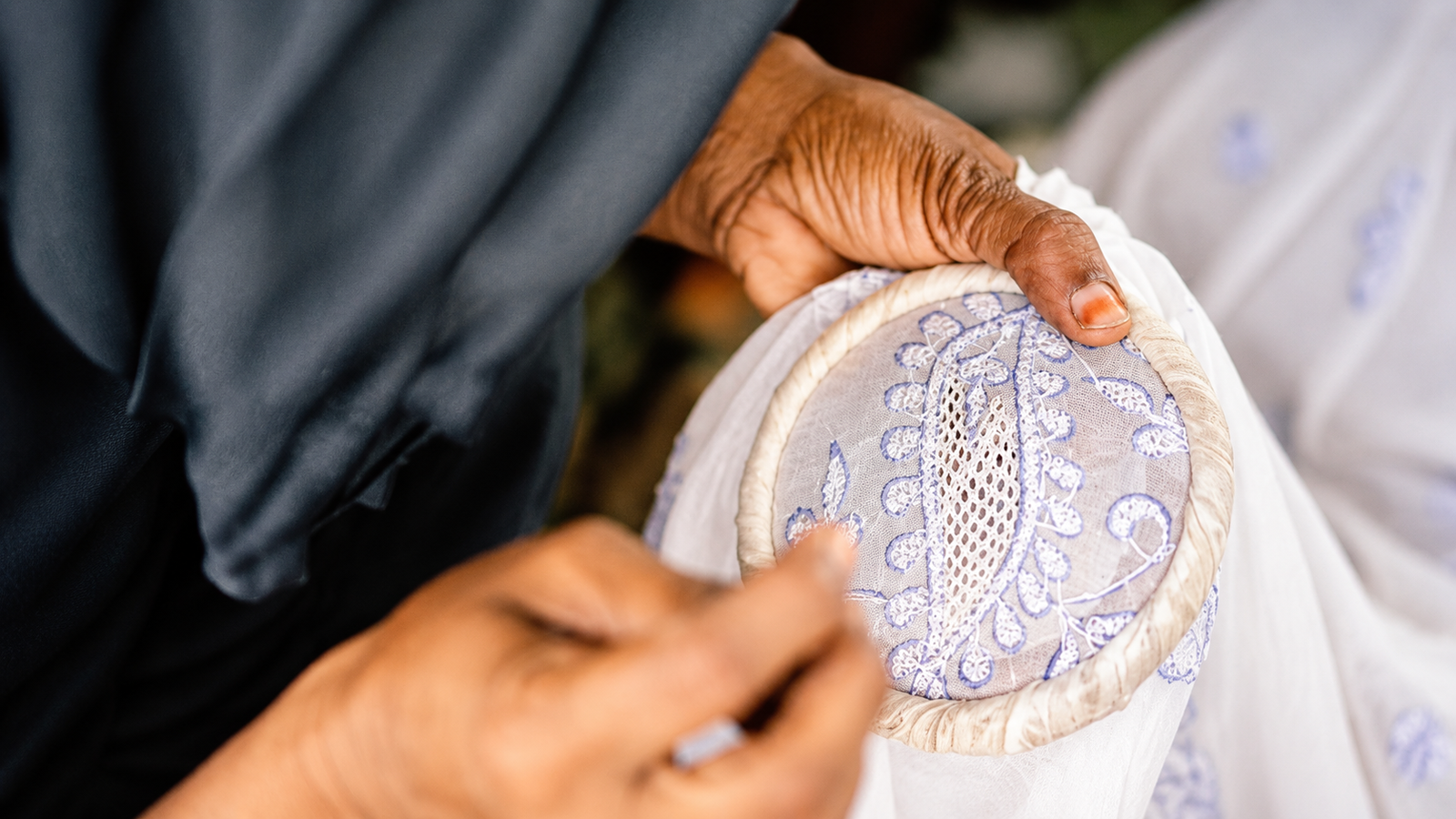
Known as shadow work, where embroidery is done on the reverse side, creating a delicate shadow effect visible from the front.
Phanda
Small knot-like stitches resembling tiny pearls.
Murri
A more refined version of Phanda, considered one of the most difficult and disappearing stitches today.
Hool
A delicate eyelet stitch used for floral motifs.
Rahet
A raised stitch that adds texture and dimension.
Keel Kangan
A decorative stitch often used in floral patterns.
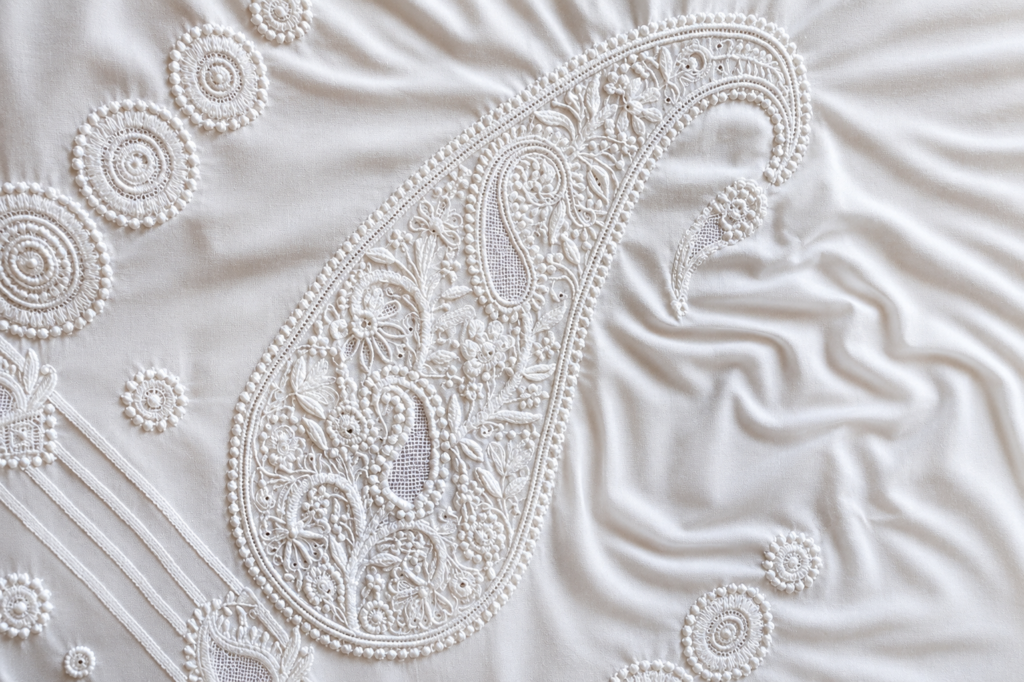
Detailed white-on-white Chikankari embroidery featuring traditional paisley motifs and intricate handcrafted stitches.
The Magic of Jali Work
Among all Chikankari techniques, Jali remains one of the most admired.
Unlike cutwork, Jali is created by carefully separating and rearranging fabric threads without cutting them. The result is a net-like pattern that resembles lace woven into the fabric itself.
Creating authentic Jali requires exceptional skill, patience, and experience. Even today, only a limited number of artisans possess mastery over traditional Jali work.
Patterns Inspired by Nature
Chikankari draws much of its inspiration from the natural world.
Common motifs include:
- Flowers
- Jasmine vines
- Lotus petals
- Mango patterns
- Creepers
- Leaves
- Paisleys
- Geometric borders
These motifs reflect the gardens, architecture, and aesthetics of Mughal and Awadhi culture.
From White-on-White to a Rainbow of Colours
Traditional Chikankari was known for white embroidery on white muslin.
However, consumer preferences changed with time.
As fashion evolved, artisans began working on:
- Georgette
- Chiffon
- Silk
- Organza
- Cotton blends
- Modal fabrics
- Viscose fabrics
Colored threads, pastel shades, fusion wear, and contemporary silhouettes entered the market. Today, Chikankari is seen on kurtas, sarees, dresses, jackets, co-ord sets, menswear, and even western outfits.
The Women Behind the Craft
One of the most remarkable aspects of Chikankari is the role of women artisans.
For generations, thousands of women across Lucknow, Barabanki, Rae Bareli, Hardoi, and surrounding regions have practiced embroidery from their homes. Their skill has preserved the craft through political change, economic downturns, and shifting fashion trends.
Every finished garment often passes through multiple hands before reaching the customer. Designing, block printing, embroidery, washing, dyeing, finishing, and quality control are usually performed by different specialists.
Chikankari Goes Global
What was once a craft associated with the royal courts of Awadh is now worn across the world.
Designers, celebrities, and international fashion houses frequently incorporate Chikankari into contemporary collections. The embroidery has appeared in global fashion campaigns, films, destination weddings, and luxury couture collections.
Today, a significant portion of authentic Chikankari production still originates from Lucknow and surrounding districts before reaching customers across India, the Middle East, Europe, North America, and other international markets. You can check out this tale about how chikankari got to the global level https://www.instagram.com/p/DZcfxKQzGrg/
Challenges in the Modern Era
Despite its popularity, Chikankari faces several challenges.
Machine embroidery often imitates handwork at lower prices. Fast fashion demands quicker production cycles. Some traditional stitches, especially Murri and complex Jali work, are becoming increasingly rare because they require years of training and significantly more time to execute.
The challenge today is not demand. The challenge is preserving authenticity.
The Rise of Modern Chikankari Brands
The good news is that a new generation of entrepreneurs is helping preserve and promote the craft.
Actors Ali Fazal and Richa Chadha launched Ehaab Couture in collaboration with designer Yasmin Saeed with the objective of creating awareness about authentic Lucknow Chikankari and supporting artisan communities. The initiative emerged after recognizing the economic challenges faced by artisan families and the need for better distribution models.
Similarly, Lucknow-born content creator Harshita Gupta launched Chikankari Hues to bring a contemporary interpretation of the craft while ensuring work opportunities and fair recognition for master artisans. The brand seeks to make traditional embroidery relevant for younger audiences without compromising its roots.
Alongside such initiatives, numerous local brands, boutique stores, designers, and family-run businesses across Lucknow are investing in authentic craftsmanship, digital marketing, exports, and storytelling around the craft.
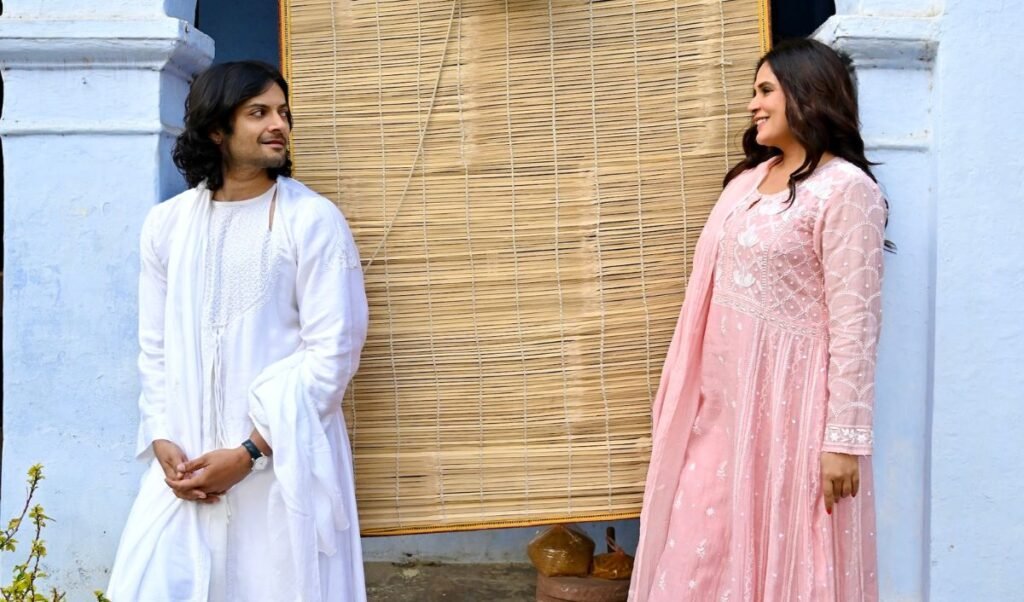
Lucknow Chikankari outfits from Ehaab Couture in a heritage-inspired setting.
Chikankari Hues brand logo inspired by traditional Lucknow Chikankari embroidery and paisley motifs.
The Future of Chikankari
The future of Chikankari lies in balancing tradition and innovation.
The craft cannot survive by remaining frozen in history. At the same time, it cannot lose the techniques that make it unique.
Fortunately, a growing number of designers, entrepreneurs, creators, and consumers are choosing authenticity over imitation. Social media, e-commerce, and global fashion have given Lucknow’s artisans access to audiences that previous generations could never imagine.
Every hand-embroidered piece carries within it centuries of history, countless hours of labor, and the spirit of a city known for elegance.
Chikankari is no longer just Lucknow’s embroidery.
It is Lucknow’s story, stitched into fabric and worn across the world.