




How Lucknow became a second home for the faith, the songs and the longing of those who carry their roots with them.
Chhath Puja in Lucknow: A Festival of Water, Light and Memory
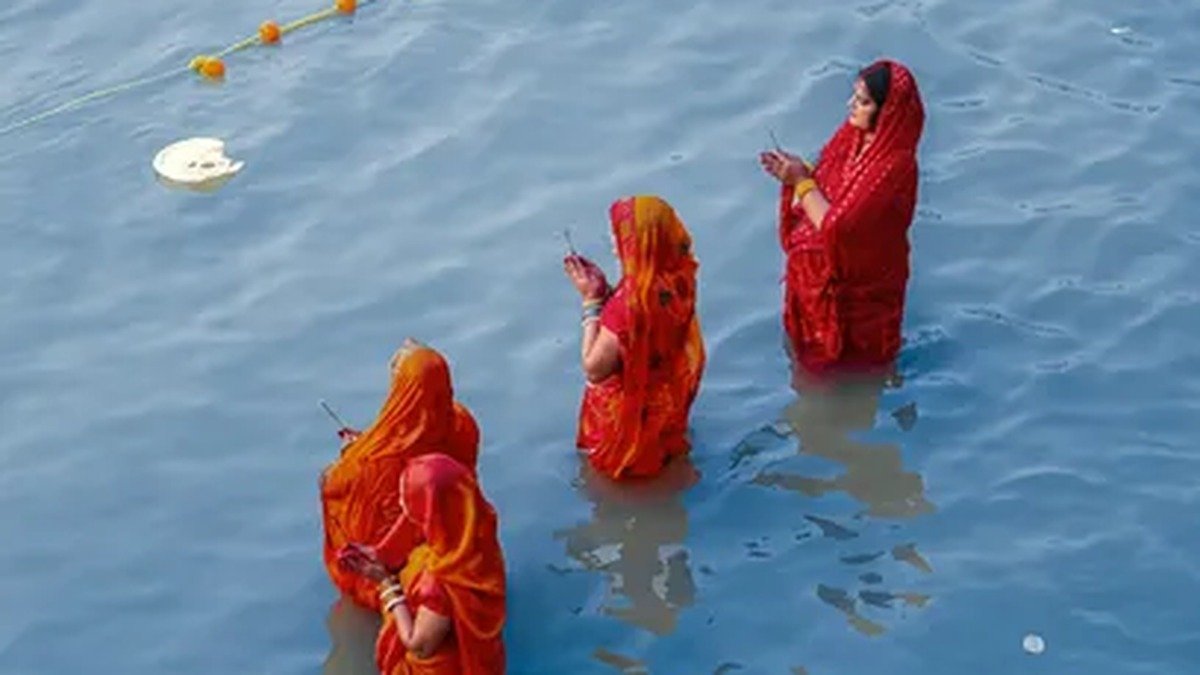
There is a moment, just before sunset on the evening of Chhath Puja in Lucknow, when a river seems to hold its breath. Thousands of people stand waist-deep in the cold water, bamboo soops in their hands, lamps flickering on the surface, faces turned toward a sun that is slowly lowering itself into the horizon. Nobody speaks. Then a woman’s voice rises in a Bhojpuri or Maithili folk song, old as the river itself and suddenly the whole ghat is singing.
This year, that river is the Gomti and that city is Lucknow.

The Tales Behind Chhath Puja
Chhath is among the oldest and most austere festivals of the Hindu tradition, dedicated to Surya, (Sun God) and to Chhathi Maiya, the nurturing mother who guards children and families. There are no idols and no priests between the devotee and the divine, only a person, the water and the light. Its origins live in many stories:
- Sita and Rama: after returning to Ayodhya, they are remembered as fasting and offering prayers to the Sun.
- Draupadi and the Pandavas: she is said to have observed the vrat to restore her family’s lost fortunes.
- Karna: the son of Surya, he is remembered standing in the river every dawn, offering water to his father.
- King Priyavrat and Queen Malini: they had lost all hope of a child until they worshipped Shashthi Devi, the goddess of the sixth day and were blessed.“Shashthi” means “sixth,” which in Hindi becomes “Chhath,” and from it comes the name Chhathi Maiya. She is worshipped on the sixth day (Shashthi) of the month of Kartik as per the Hindu Calendar.
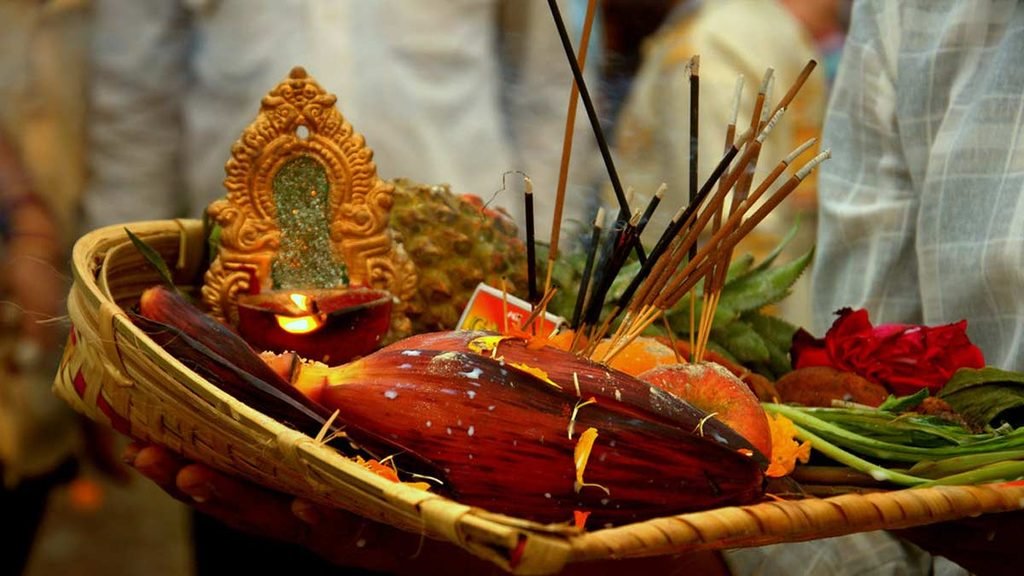
Over four days, devotees, mostly women but many men too, walk a path few festivals demand. There is Nahay Khay, a ritual bath and a simple, pure meal. There is Kharna, a day of fasting broken only by sweet kheer and roti at dusk. Then comes the great vow: a nirjala fast of roughly thirty-six hours, without a drop of water. On the third evening they offer arghya to the setting sun and on the fourth morning they stand in the river again before dawn, shivering and praying, until the first golden light touches the water.
The offerings are humble and earthly: sugarcane, coconuts, seasonal fruit and fragrant thekua, made with jaggery and wheat by hands that learned the recipe from a grandmother.
How Chhath Puja Travelled Across the World
Chhath was born in the plains of Bihar, Jharkhand and eastern Uttar Pradesh majorly but its people did not stay in one place. They went to Mumbai and Delhi, to Surat and Bengaluru, to factories, offices and universities. Generations ago, their ancestors even crossed oceans, carrying the tradition to Mauritius, Fiji, Trinidad, Guyana and Suriname. Today Chhath is celebrated in Nepal, in the Gulf, in the United Kingdom and across the United States.
Wherever it goes, it does not change its heart: the same songs, the same fast, the same reverence for the sun, the same tears. For those far from home, Chhath is not only a prayer. It is a homecoming.
Chhath Puja in Lucknow: The City That Opens Its Arms
In Lucknow, a city famed for its tehzeeb and its welcome, lakhs of families from Bihar, Jharkhand and eastern Uttar Pradesh have made a home as students, professionals, shopkeepers and teachers. Every year, as the festival approaches, the city makes room for them.
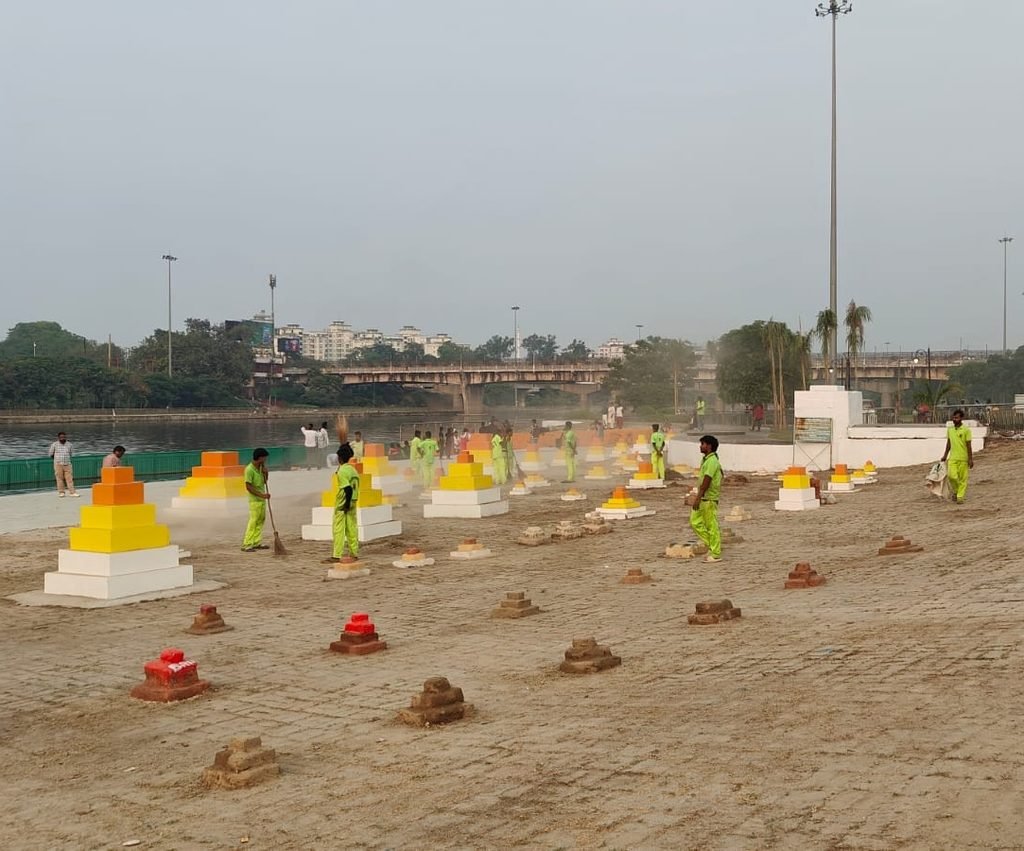
According to reports, the state government, the Lucknow Municipal Corporation and the Lucknow Development Authority have organised arrangements across roughly 110 to 135 sites, including a civic upgrade of about ₹1.94 crore for 47 major ghats and artificial ponds. Ghats have been cleaned and lit, barricades put up, water-police boats and divers stationed and medical camps set up for those who spend long hours in the cold water.
The Laxman Mela ground is the main venue, where the Chief Minister is reported to inaugurate the festivities alongside folk performances. Along the Gomti, each ghat has its own character: Jhulelal Vatika near Daliganj for large community gatherings, the historic Kudiya Ghat in Husainabad glowing with lamps, Khatu Shyam Mandir Ghat on Birbal Sahni Marg, the central riverfront at Mankameshwar Mandir Ghat and Hanuman Setu Ghat, and neighbourhood ghats like Lallu Mal Ghat for families who have worshipped there for years.
These are not just sites on a government list. Each one is a small hometown, remade on the banks of the Gomti for a few days.
The Feeling of Chhath Puja in Lucknow
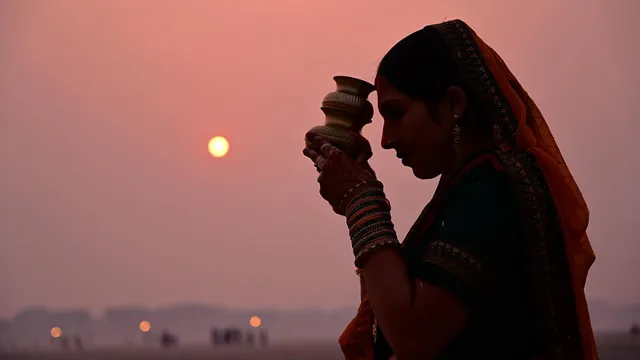
Picture a young woman who moved to Lucknow for work, far from her village in Bihar. She wakes before dawn carrying a bamboo basket her mother-in-law once gave her. At the ghat, she sees strangers who sing the same songs and stand in the same cold water. Someone she has never met helps her arrange her soop. Someone hands her a cup of warm tea when the fast ends. In that moment, the city stops being unfamiliar.
That is the quiet miracle of Chhath. People who left their villages did not leave their songs, their tastes or their faith behind. They carried them in their hearts and every year the river gives them a place to set them down. And in making space for this celebration, Lucknow shows that a city grows richer when it honours the roots of those who live in it.
When the Sun Rises
On the final morning there is a hush that feels almost holy. The sky turns from grey to rose to gold. Devotees, tired, hungry and utterly full, lift their arghya toward the first ray. Conch shells sound. Children in shawls clap. Somewhere on the ghat, a son holds up his phone so his parents back home can watch the sun rise over the Gomti.
Then the fast is broken, the prasad is shared, and strangers embrace as family.
Jai Chhathi Maiya.