



The candles flicker against the high ceilings of an old Lucknow haveli. Outside, the lanes of Chowk settle into evening quiet. Inside, a small group sits on white sheets. A poet clears his throat. A musician tunes the tanpura. Someone pours tea. Conversation moves slowly from a couplet by Mir to a thumri that suddenly fills the room. This was a baithak: not a performance for an audience, but a shared space where art, thought, and presence mattered equally.
Today, in a café near Hazratganj or a living room in Gomti Nagar, a young poet steps up to an open mic. A dastango begins a story of Wajid Ali Shah. Friends lean in over cups of chai. The setting has changed. The impulse has not.
Understanding the Baithak Culture in Lucknow
A baithak was never just a gathering. The word means “a sitting,” yet in the baithak culture in Lucknow it carried heavier meaning. It was a carefully held space where people came not only to be entertained but to participate through listening, responding, and refining.
In Awadhi tehzeeb, conversation itself was an art. One did not interrupt. One waited. Praise was measured. Criticism, when it came, was wrapped in courtesy. The host’s duty was hospitality; the guest’s duty was presence. Silence had value. A well-timed pause after a sher could matter more than applause.
This differed from a large public mushaira or formal concert. A baithak was intimate by design. Numbers were limited so every voice could be heard. Music, poetry, storytelling, and philosophy mixed freely. A single evening might move from ghazal to dastangoi to a discussion on etiquette without anyone announcing a change of programme.
Historical Roots of Baithak Culture in Lucknow
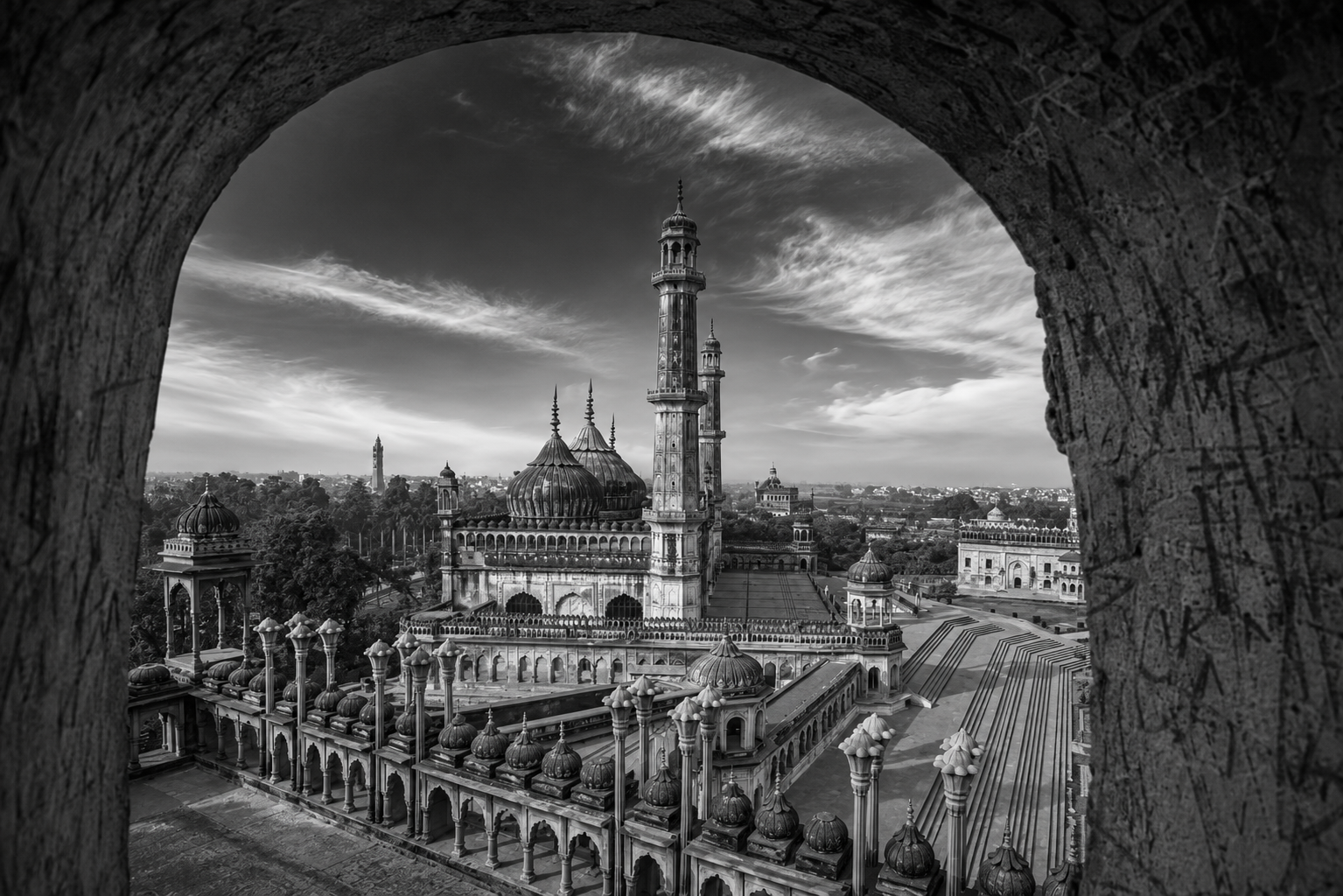
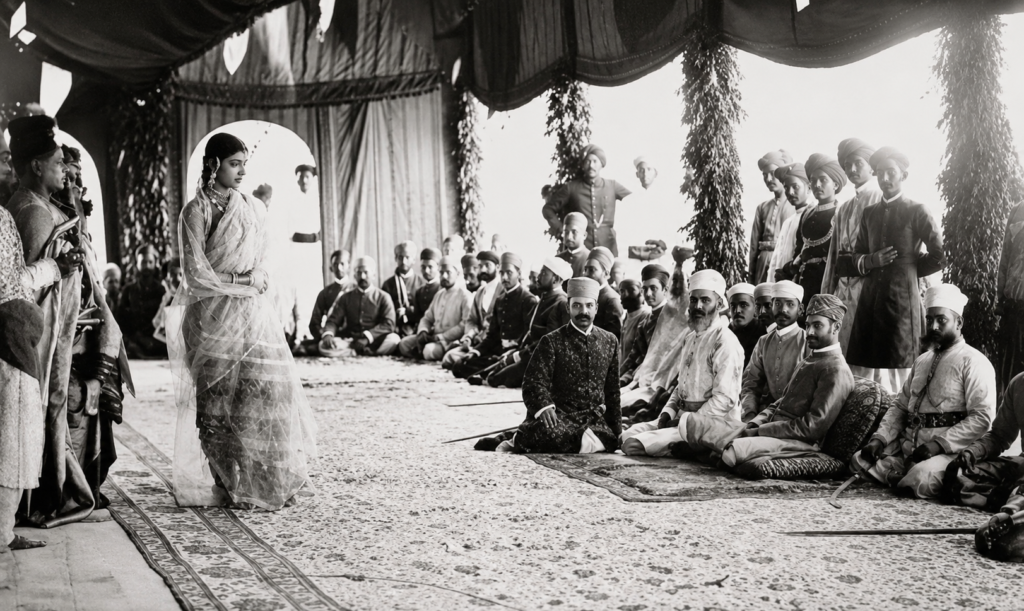
The roots of the baithak culture in Lucknow lie in the Nawabi court of Awadh. From the mid-eighteenth century, as Delhi’s Mughal centre weakened, artists, poets, and musicians migrated east. Lucknow became a magnet. The Nawabs offered patronage and an atmosphere that valued refinement.
Under rulers such as Asaf-ud-Daula and especially the last Nawab, Wajid Ali Shah, the arts flourished. Wajid Ali Shah was himself a poet, composer, and dancer who wrote under the pen name ‘Akhtarpiya‘. He is widely credited with elevating Kathak to a major court form and enriching thumri. His court supported the Lucknow gharana of Kathak through masters such as Bindadin Maharaj. Musical baithaks, literary gatherings, and private mehfils were regular features of elite life.
Mushairas had their place, but the more intimate baithak remained the true laboratory of taste. Here a poet tested new work, a musician explored a raga at length, and listeners shaped the evening through their responses. Dastangoi, the oral storytelling tradition of Urdu, found ready audiences. Kathak performances often unfolded in the same settings. Philosophy and social observation flowed through the conversation.
Awadhi culture prized nazakat (delicacy) and tehzeeb. These values made the baithak culture in Lucknow possible. The gathering was as much about how one sat, spoke, and listened as about the art itself.
Why Baithak Culture in Lucknow Mattered
Baithaks became the quiet engine of Lucknow’s reputation as a city of culture. They nurtured Urdu poetry and later Hindi literature. Ghazals found their most attentive listeners here. Thumri and dadra genres of longing and subtle emotion thrived in rooms where the audience understood the language of gesture and pause. Classical music was experienced not as distant spectacle but as a shared journey.
Dastangoi kept oral narrative alive. Kathak, with its storytelling roots, found a natural home. Intellectual debate sat comfortably beside aesthetic pleasure. Above all, the baithak created a particular kind of social bonding: relationships formed through shared attention rather than shared spectacle.
This is why Lucknow became known for its conversational culture. People did not merely talk; they cultivated talk. The ability to sustain an evening of meaningful exchange was itself a mark of cultivation.
The Decline of Baithak Culture in Lucknow
The decline was gradual. After 1857 and the exile of Wajid Ali Shah, royal patronage collapsed. The great havelis that once hosted these evenings began to fragment. Nuclear families replaced joint households. Community spaces shrank.
Television entered living rooms. Later, smartphones and social media offered constant, low-effort stimulation. Fast-paced urban life left little room for evenings that demanded patience. Commercial entertainment large concerts, cinema, streaming proved easier to organise and monetise. The slow art of the baithak seemed old-fashioned.
Urban expansion in Lucknow changed the city’s texture. Older neighbourhoods densified or emptied. New colonies prioritised privacy over the porous social life of the old mohallas. The physical and social architecture that had supported the baithak culture in Lucknow eroded.
The Modern Revival of Baithak Culture in Lucknow
Yet the impulse has not disappeared. In recent years, especially after the pandemic’s enforced isolation, a quiet return of the baithak culture in Lucknow has been visible.
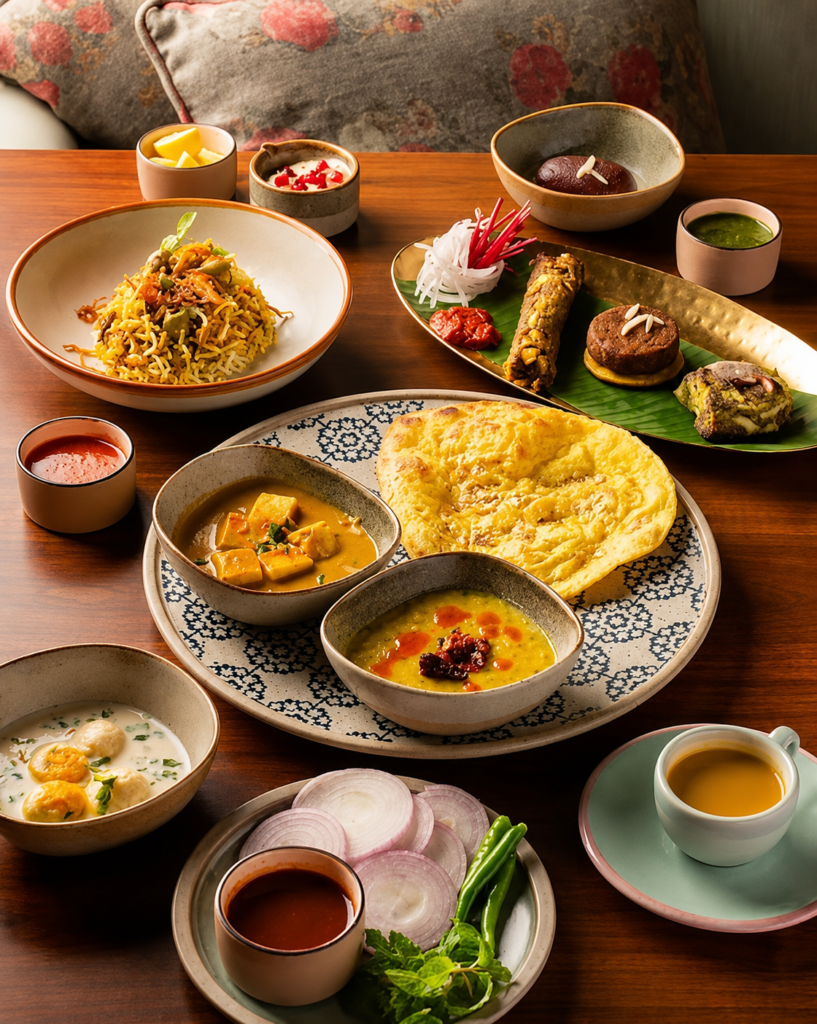
Larger but still intimate events have appeared. Baithak-e-Awadh, organised by Kaamakazi Events, stages evenings that combine Sufi music, dastangoi-style storytelling by artists such as Himanshu Bajpai and Pragya Sharma, and Awadhi dining consciously echoing the multi-layered mehfil of the past. Once Upon India’s Sukoon Baithak series has brought ghazal and poetry evenings to the city.
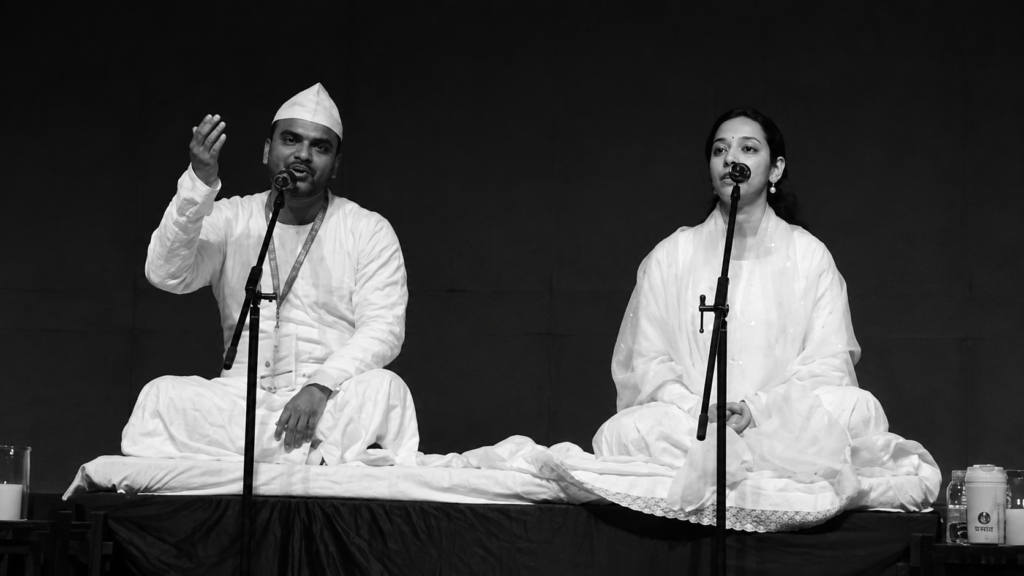
At the grassroots, open-mic culture has taken root. Platforms such as Kavita Kisse Kahaniyan run regular “Spill the Word” poetry and storytelling sessions and they also organize a fest “Spill the Word” which promotes literature and culture in Lucknow. Cafés host spoken-word nights. Independent cultural spaces and heritage venues offer classical music evenings and literary discussions. Book clubs and community reading sessions create smaller circles of attention. Heritage walks sometimes conclude with storytelling. House concerts continue the older model of inviting a limited number of listeners into a domestic space.
These new forms are not identical to the Nawabi baithak. Many are ticketed or publicised on Instagram. Yet the core values reappear: intimacy, listening, the mixing of forms, and the preference for presence over spectacle. Young people who spend their days scrolling are choosing evenings that demand they put the phone away.
Voices, Digital Spaces, and the Future of Baithak Culture in Lucknow
Public accounts capture the motivation. Organisers speak of a post-lockdown hunger for real connection and of surprise that Lucknow had let the tradition fade. Artists note that the intimate format allows conversation between performer and listener ‘the old guftugu‘ in a way large stages cannot. Participants, especially younger ones, describe relief at slowing down and being fully present.
Gen Z’s turn toward these spaces is not pure nostalgia. It is a response to digital fatigue. After years of algorithmic feeds, the physical room where someone reads a poem and others actually listen feels radical.
Online spaces like Instagram Lives, X Spaces, Discord communities, WhatsApp reading groups can share poetry and build communities. They have value, especially for those who cannot attend in person. Yet they struggle to recreate the baithak’s essential quality: embodied co-presence. The shared silence after a powerful couplet, the slight shift in posture when a rag deepens, the unplanned conversation that begins because two people are sitting next to each other, these remain difficult to digitise.
Physical gatherings still offer something irreplaceable in the baithak culture in Lucknow.
Conclusion: The Enduring Soul of Baithak Culture in Lucknow
The candles are different now. Sometimes they are LED. The floor may be a café’s rather than a haveli’s. The poets may arrive by app. Yet when a small group gathers, when the phones stay in pockets, when a story or a song is allowed to unfold at its own pace, and when people listen to one another with care, the soul of the baithak is present.
The baithak culture in Lucknow was never only about the past. It was a way of being together that valued depth over speed, presence over performance, and conversation as a form of art. That way of being is finding new rooms. The tradition is not returning unchanged. It is being reinvented by people who still need what it once provided and what it can still give.